FEATURES
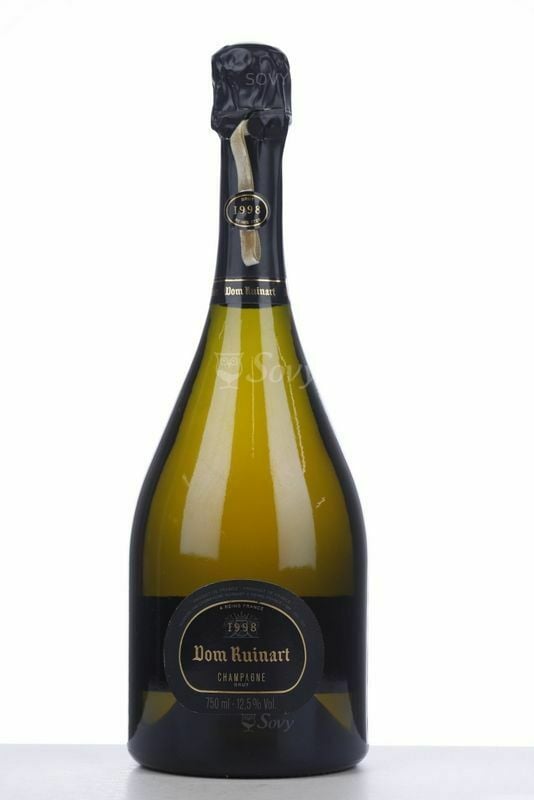
The 1998 Champagne vintage was initially mixed but has gained appreciation over time, with the best examples showing excellent balance and aging potential. Dom Ruinart Blanc de Blancs 1998, a prestige cuvée made exclusively from Grand Cru Chardonnay, is renowned for its incredible aging potential. It exhibits fine bubbles and hints of citrus fruit on the nose, evolving into a rich, expressive, and complex palate with intense mid-palate and very good length, often still remarkably youthful. Tasting notes describe smoke, toastiness, ripe Chardonnay fruit, and minerals, along with honey, acacia, butter, grilled hazelnuts, and apple. Many find it mature but not past its peak, combining tertiary notes like sherry and brioche without oxidation, leading to a fresh, lifted, and long finish. 【 A Grand Cru only, pure-Chardonnay blend, renowned for its incredible aging potential and complex, evolving character. 】
Food pairing suggestions: This elegant Champagne is ideal with shellfish, crab, and lobster. It also pairs beautifully with oysters, langoustines, raw or lightly seared scallops, white fish, sushi, and fresh goat's cheese, with its tension and chalky texture complementing delicate seafood.
Event suggestions: As a prestige cuvée, this Dom Ruinart is perfect for celebrating significant milestones, anniversaries, or as a sophisticated aperitif to elevate any special gathering. Its proven aging capability also makes it a superb choice for cellaring for future momentous occasions.
As a prestige cuvée Champagne with nearly three decades of age, this Dom Ruinart requires thoughtful handling. The 1998 vintage has proven to have incredible aging potential, with many bottles still showing remarkable youthfulness. However, older Champagne corks can be delicate, so open with care. Unlike still wines, decanting is generally not recommended for aged Champagne, as it can diminish the delicate mousse and complex aromatic nuances that have developed over time. Serve well-chilled, but not ice-cold (around 10-12°C or 50-54°F), to allow its intricate bouquet of mature and tertiary notes to fully unfold without being masked by excessive cold.