Welcome!Thank you for visiting! We look forward to seeing you.Welcome!Email is used by othersPlease enter user emailpassword reset link is sent to your email , the link will be expired in 30 mins
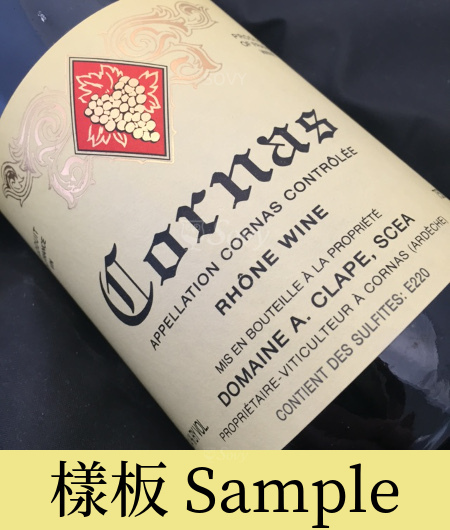
The 2000 Domaine Auguste Clape Cornas is widely regarded as one of the vintage's finest efforts, consistently placing Clape's Cornas among the appellation's best. Auguste Clape is a staunch traditionalist, employing manual harvesting and fermenting grapes in cement vats without de-stemming, followed by a 12-13 day maceration. All vineyard work is meticulously done by hand on the steep, terraced slopes. This particular vintage has been praised for its "opaque purple color" and a "sumptuously sweet, perfumed nose of white flowers, creme de cassis, melted licorice, and hints of roasted earth and meat." It offers a beautiful balance of "pure, driven plum, raspberry and cherry fruit" alongside evolving tertiary notes of "dark briar patch, sweet tapenade and mesquite." Reviewers note its "beautifully well made and balanced" character, oozing class with "power and balance, hand in hand." 【Consistently considered the best in Cornas, a benchmark for traditional Syrah.】
For a wine of this age, expect a delicate and evolved profile. Old corks and capsules can be fragile, so handle with care. Decanting for 30-60 minutes is recommended to allow the wine to breathe and shed any sediment, but be mindful not to over-decant very old wines. Serve slightly below room temperature.
Food Pairing: This mature Cornas is an excellent companion to rich, savory dishes such as roasted lamb, seared ribeye steak, or braised short ribs. Its complex tertiary notes would also complement game meats beautifully.
Event Suggestions: Ideal for a special celebratory dinner, a gathering of serious wine collectors, or a quiet evening appreciating a well-aged, classic Rhône Syrah.
BACKGROUND
Domaine Auguste Clape is a wine estate located in the Cornas region of the Northern Rhone Valley. The estate was founded by Clape's grandfather, a planter who moved to Cornas from Languedoc after the growers' strike of 1906-07. The estate consists of just 8 hectares (20 acres) of old vines in a prime, sunny, steeply terraced location on the west bank of the Rhone. and a small amount of Saint-Perret Blanc from just 0.2 hectares (0.5 acres) of Marsanne.