FEATURES
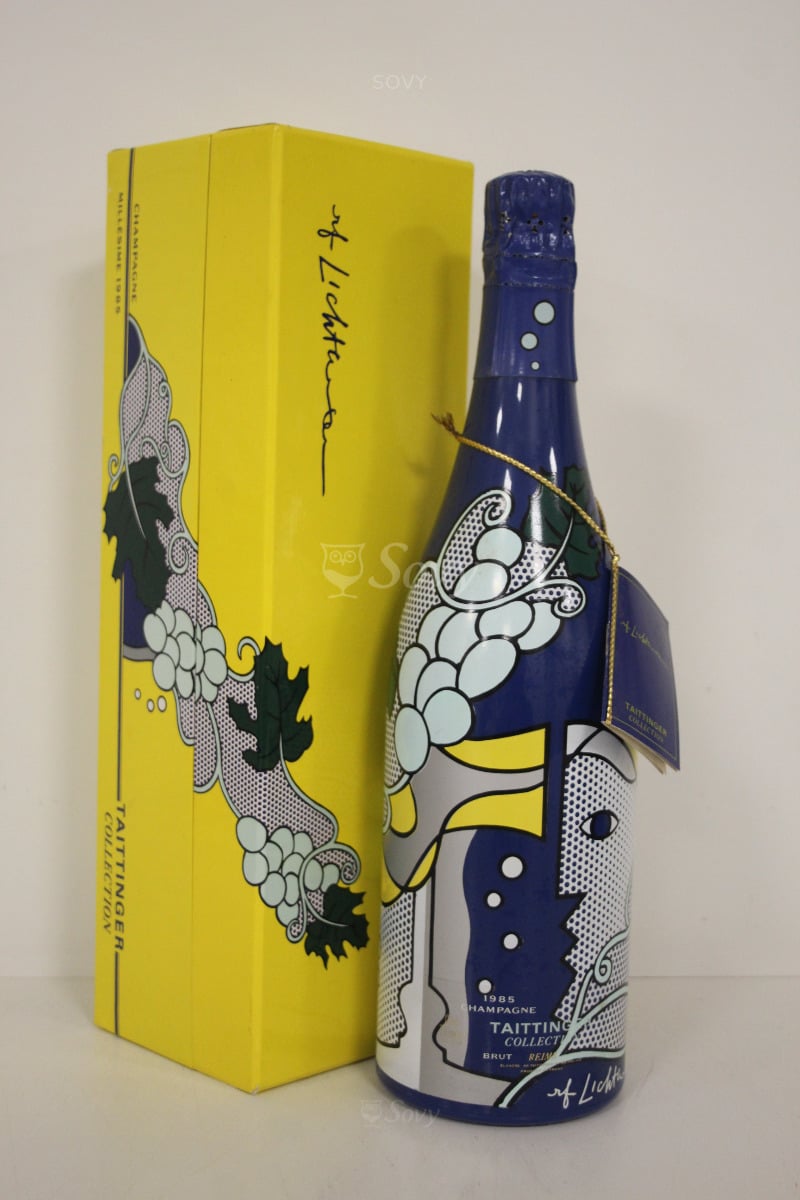
The 1985 Taittinger Collection Lichtenstein is a truly special vintage, not only for the quality of the Champagne but also for its iconic bottle design by American Pop Artist Roy Lichtenstein. This Brut Millésimé is crafted from 60% Pinot Noir and 40% Chardonnay from Grand Cru vineyards. The 1985 vintage in Champagne faced severe winter temperatures and spring frosts, but a fine September harvest ultimately rescued the year, leading to better-than-feared yields. After decades of aging, this Champagne often presents with lovely aged flavors of mushroom and brown apples, alongside a decent acidity. Tasting notes frequently mention lemon curd, dried apricot, golden raisin, canned peach, almond, grilled pineapple, honeysuckle, and honey, with some describing it as lively with a very long finish despite potentially having fewer bubbles due to age. Other descriptors include ginger, honey, earthy, citrus, and notes of toffee and toast. 【 Adorned with a distinctive Roy Lichtenstein pop art label, making it a collector's item. 】
For a wine of this age, expect a delicate and evolved profile. It may show distinguished old vin features like toffee, earthy, persimmon cider, and dried fruit. The cork and capsule may be fragile, so handle with extreme care. Decanting is generally not recommended for aged Champagne as it can dissipate the remaining effervescence too quickly. Instead, serve directly from the bottle into flutes, allowing it to breathe gently in the glass. Ensure it is well-chilled but not overly cold (around 10-12°C) to allow its complex aromas to unfold. Pour slowly to preserve the delicate bubbles.
Food pairings for this complex and traditional sparkling wine include shellfish, crab, and lobster. It can also beautifully complement pork, rich fish (like salmon or tuna), and mild and soft cheeses.
This Taittinger Collection Lichtenstein 1985 is ideal for a momentous anniversary, a significant milestone celebration, or as a centerpiece for a sophisticated tasting event where its artistic and vinous merits can be fully appreciated. It's a testament to both art and the enduring quality of fine Champagne.
 Last One