FEATURES
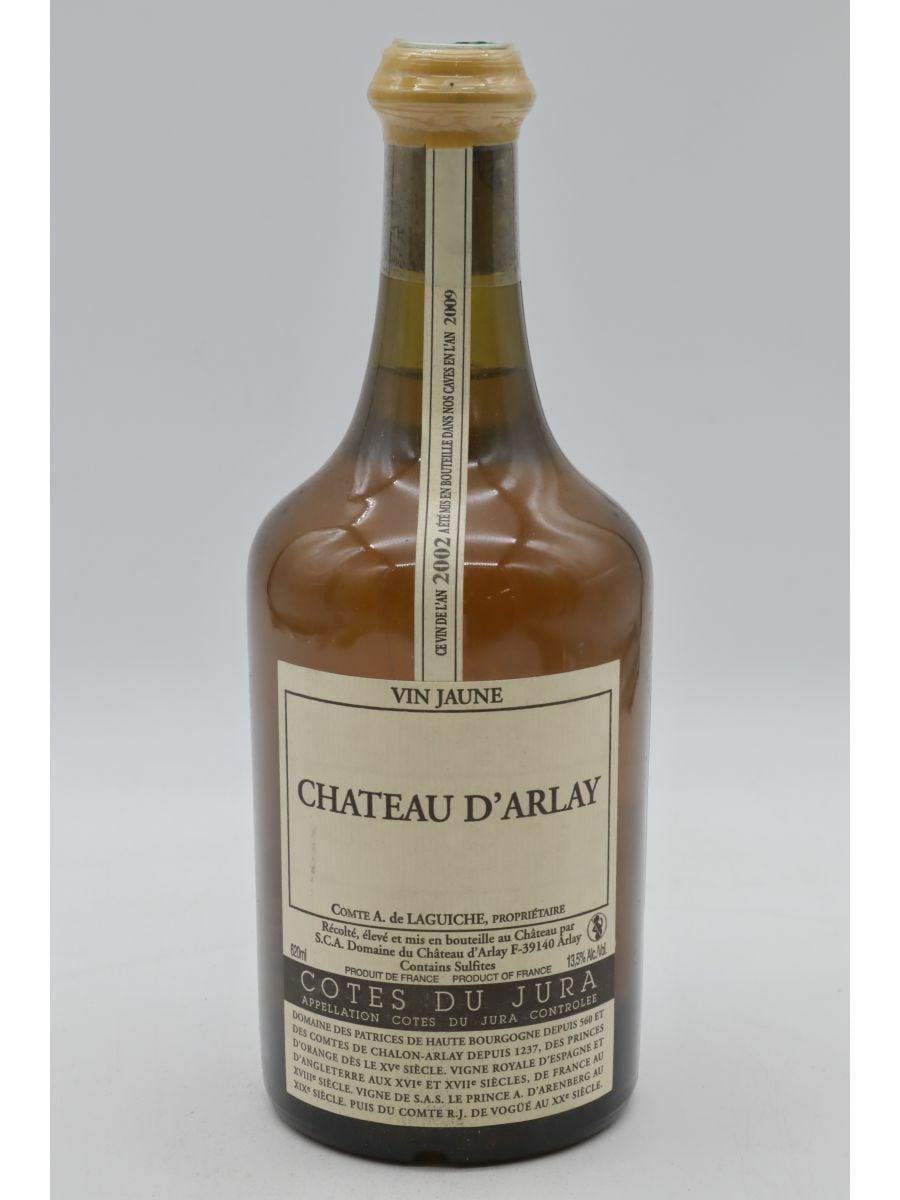
The 2002 Château d'Arlay Côtes du Jura Vin Jaune is a testament to the unique winemaking traditions of the Jura region. This distinctive white wine, made entirely from Savagnin grapes, undergoes a fascinating oxidative aging process for at least 6.5 years in barrels without topping off, allowing a veil of natural yeast (flor) to form. While the 2002 vintage globally was quite variable, with many wines past their prime, Vin Jaune is renowned for its exceptional longevity, often aging for decades, even centuries. The 2002 and 2004 Vin Jaunes from Château d'Arlay have been bottled, though their release has been subject to speculation. 【 Unique oxidative aging process and exceptional longevity 】
Expect a wine with an intense golden color, offering a complex bouquet of oxidative, nutty, caramel, and ginger notes. It often presents a sherry-like nose with hints of oxidized yeast and subtle tree fruit, evolving with age to reveal sweetness, dried fruits like prunes and figs, and a spicy, nutty character. On the palate, it is both rich and delicate, with fresh acidity and prominent notes of almond, walnut, mushroom, dried earth, and salt. Some expressions might show a more floral, spicy, and nutty character, distinguishing them from creamier, more oxidised-apple-and-dried-figs-fruity Vin Jaunes.
This Vin Jaune is a superb companion to rich and savory dishes. It pairs beautifully with mature and hard cheeses, especially Comté, as well as spicy foods and mushrooms. Consider it with fine charcuterie, simple fish appetizers, or white meat entrées. Traditional pairings also include Manchego and Parmesan.
The 2002 Château d'Arlay Vin Jaune is perfect for gastronomic meals, celebratory gatherings, or dedicated tasting sessions for those who appreciate rare and aged white wines. Its profound character makes it a conversation starter.
Serving Advice for this aged wine: Given its age, this 2002 Vin Jaune should be handled with care. Old corks can be fragile, so a Durand or an Ah-So opener is recommended. Decanting is often beneficial to allow the wine to open up and shed any sediment, though some prefer to experience its initial, more reductive notes. Serve slightly chilled, around 12-14°C (54-57°F), to best appreciate its intricate aromas and flavors. Be mindful of the capsule, which might also be delicate.