FEATURES
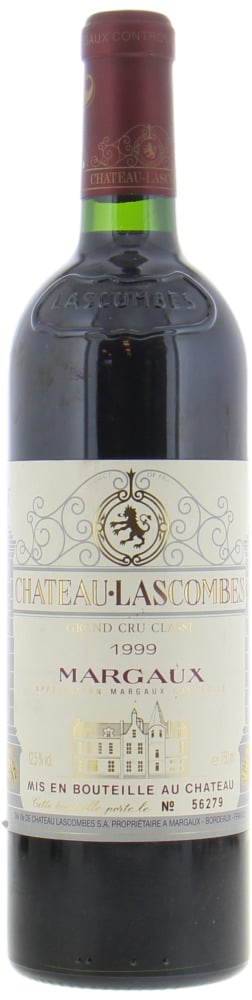
🏰 The 1999 Chateau Lascombes is a 【mature Margaux from a vintage noted for ripe fruit, high tannins, and longevity in Bordeaux】. While specific tasting notes for the 1999 are not readily available, Chateau Lascombes wines are generally known for their elegance and ability to age. Older Bordeaux wines are more delicate and develop nuanced characters with time. This wine should offer a complex bouquet with evolving tertiary aromas alongside its fruit profile, showcasing the pedigree of a Second Growth property.
🍴 Chateau Lascombes pairs exceptionally well with classic meat dishes such as veal, pork, beef, lamb, duck, game, roast chicken, and grilled dishes. It's also a perfect match for Asian dishes, hearty fish courses like tuna, mushrooms, and pasta, as well as cheese. For mature Bordeaux, lamb is an excellent option, but avoid strong flavors in the dish. Simple preparations like a perfectly roasted chicken also work beautifully with a mature Bordeaux.
🥂 This 1999 vintage is ideal for a special occasion celebrating a milestone, a sophisticated dinner, or for enjoying with fellow wine connoisseurs who appreciate the evolution of aged Bordeaux. It should be served at 15.5 degrees Celsius (60 degrees Fahrenheit) to allow its freshness and lift to shine. Decanting is often beneficial for older Bordeaux to soften tannins and remove sediment.
A second growth winery near Chateau Margaux
BACKGROUND
Château Lascombes is a wine estate in the Margaux appellation, producing a classic Bordeaux Blend wine known for its deep colour, rich texture, ripe fruit and elegant tannic structure. It was ranked a second growth in the 1855 Bordeaux Classification.The vineyard is situated in the northwest of the appellation, neighboring châteaux Labégorce, Perrière and La Gurgue. It covers 112 hectares (275 acres) in Margaux with a parcel of 6ha (15 acres) in the Haut-Médoc appellation. The vineyard has three distinct parts of roughly equal size; a gravelly mound on which Cabernet Sauvignon and Petit Verdot are planted, a clay-gravel area of Merlot and Cabernet Sauvignon, and clay-limestone plots better suited to Merlot. Unusually for Margaux, Merlot accounts for around 50 percent of plantings with Cabernet Sauvignon playing second fiddle along with a small amount of Petit Verdot. Despite this, the grand vin tends to feature around 55 percent Cabernet Sauvignon.