FEATURES
🏰news | features + short tasting note IN ENGLISH
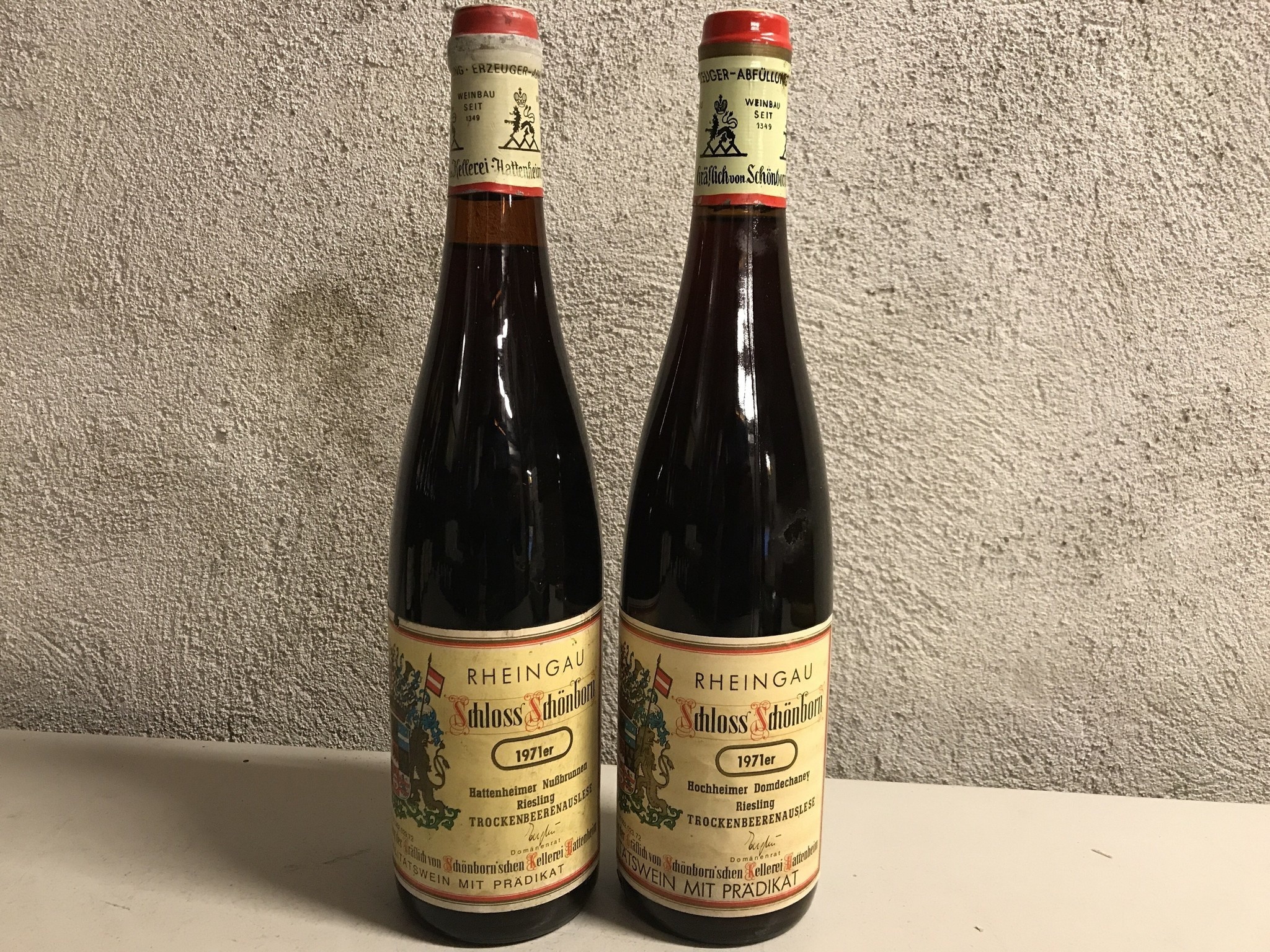
【Experience a rare piece of history with Schloss Schonborn's 1971 Riesling Hattenheimer Nussbrunnen Trockenbeerenauslese, a legendary sweet wine from a truly exceptional vintage.】 The 1971 vintage in Germany is universally acclaimed as one of the greatest of the 20th century, particularly for noble rot (Botrytis cinerea) affected wines like Trockenbeerenauslese (TBA), which require perfect conditions for their development. Schloss Schonborn, one of Germany's oldest and most prestigious wineries, is renowned for its exquisite Rieslings from top Rheingau vineyards like Hattenheimer Nussbrunnen. This 50-year-old TBA is a liquid treasure, expected to display an astonishing complexity of dried apricots, honey, marmalade, and caramelized nuts, interwoven with profound minerality and a vibrant acidity that defies its age. It promises an incredibly long, ethereal finish, a testament to its extraordinary quality and longevity.
🍴 Chinese Cantonese food pairing various types of suggestion east or west corresponding to wine cost IN ENGLISH
This opulent TBA is a dessert in itself, but can be exquisitely paired. For Cantonese cuisine, consider it with almond cream dessert (杏仁露) or a delicate mango pudding, where its sweetness complements without overpowering. It could also surprisingly work with a very mild, sweet char siu. Western pairings include foie gras, blue cheeses like Roquefort, crème brûlée, or fruit tarts with a hint of acidity.
🥂 fit for event suggestion IN ENGLISH
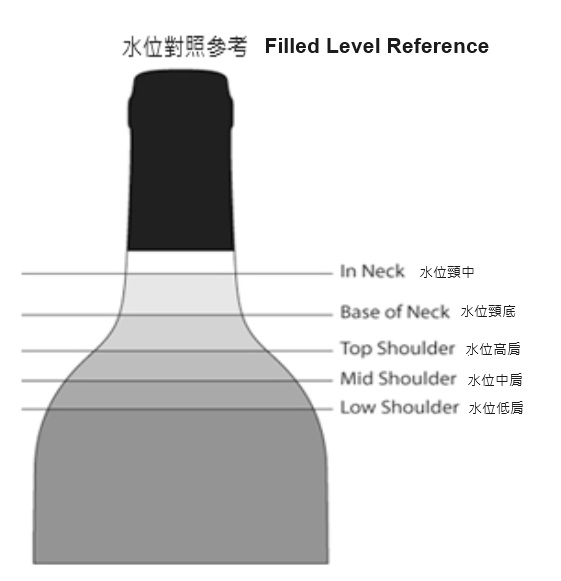
An unparalleled choice for a momentous anniversary, a significant birthday, or as the crowning glory of a gourmet meal. This is a wine for contemplation and celebration of life's most special moments. Given its extreme age, utmost care is required. Ensure the bottle has been stored perfectly. Stand it upright for at least a week to allow any sediment to settle. Use an Ah-So or Durand opener with extreme caution, as the cork will be very fragile. Decant very gently, if at all, just before serving, to separate from sediment. Serve slightly chilled, around 10-12°C (50-54°F), in small dessert wine glasses.