FEATURES
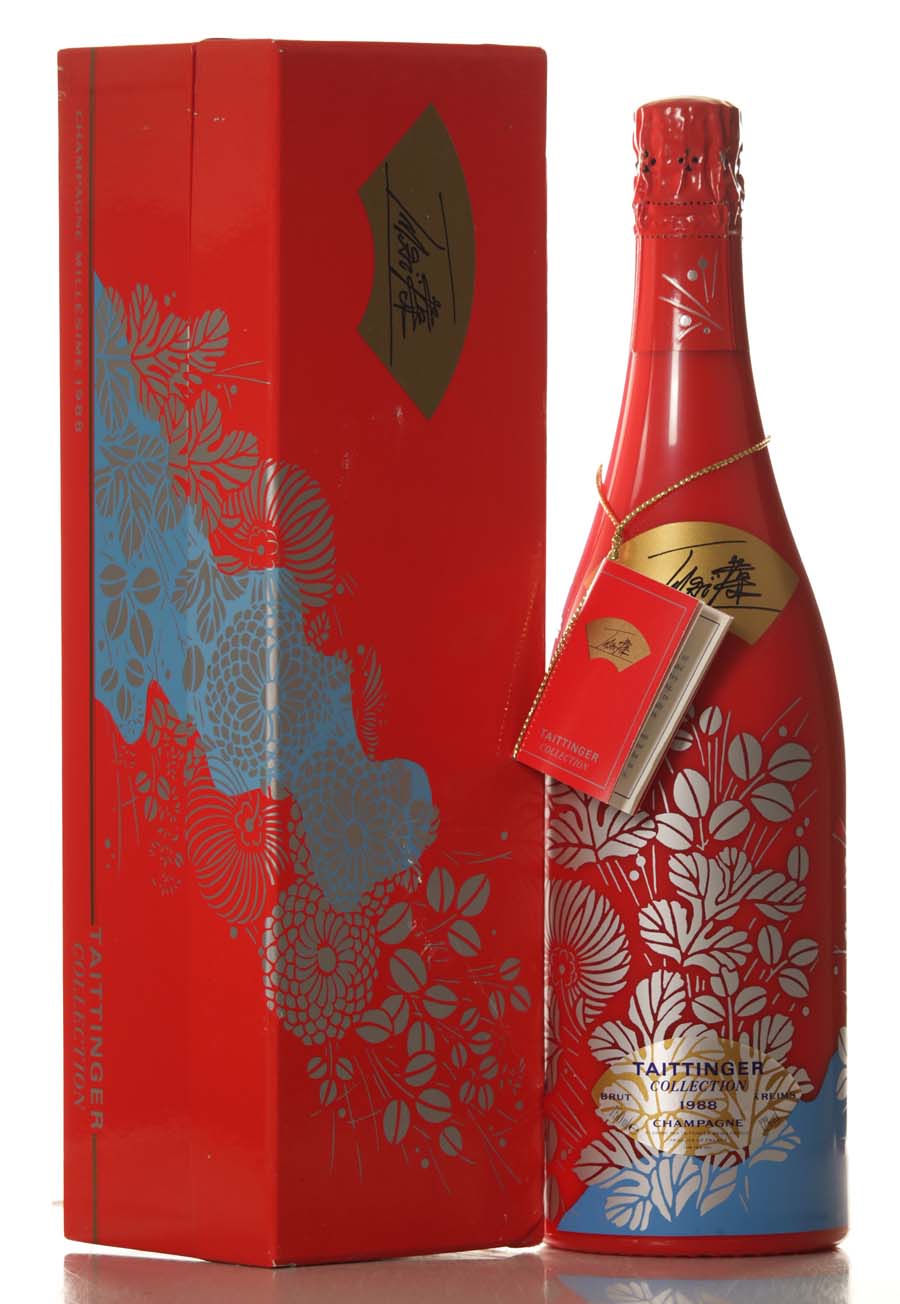
🏰 The 1988 Champagne vintage was by most accounts excellent, with a warm spring and hot June ensuring successful budburst and flowering. Despite some heavy downpours in August that cut yields, the September harvest was largely successful, producing wines that were traditional in nature with strong structures ideal for long-term aging. Many top wines from this superb vintage had the fruit character, acidity, structure, and depth to reward extended cellaring. Taittinger's Collection Toshimitsu 1988 is part of their renowned artistic series, where each vintage features a bottle designed by a different artist, with Toshimitsu Imai being the artist for this particular year. 【 Artistic collaboration and superb aging potential of a classic Champagne vintage 】
These are classically structured, concentrated wines with the necessary acidity for long aging. They are powerful with good structure, rich in fruit, well balanced, and stylish. Expect an expressive nose with soft baking spices, candied fruits, dried raisins, cardamom, and mint aromas. The palate is smooth and silky-textured, with well-integrated fresh acidity and a supple, age-mellowed mousse. Some 1988 Champagnes also show delicacy of honey and almonds with fresh acidity and salinity, while others offer full and rich noses with lees character, fresh fruit, pineapple, cooked apples, chalkiness, rich peach, and lemons.
🍴 This mature Champagne pairs exquisitely with delicate seafood, such as seared scallops with petit pois and a mussel broth, or butter-poached turbot with asparagus and oyster sauce. It also complements aged hard cheeses like Brillat Savarin with candied almonds.
🥂 The 1988 Champagne vintage was superb, and some wines, particularly from top estates, are still drinking extremely well, though their window may be closing. This makes the Taittinger Collection Toshimitsu 1988 a truly special occasion wine, a rare treat for connoisseurs who appreciate the profound complexity of aged Champagne.
Serving Advice: For a wine of this age, expect a delicate and potentially fragile character. The cork may be brittle, so use a Durand opener or a two-pronged cork puller. Decanting is generally not recommended for old Champagne as it can dissipate the delicate aromas and effervescence. Serve gently chilled, around 10-12°C (50-54°F), in tulip-shaped flutes or white wine glasses to best appreciate its complex bouquet. Handle with care to avoid disturbing any sediment.