FEATURES
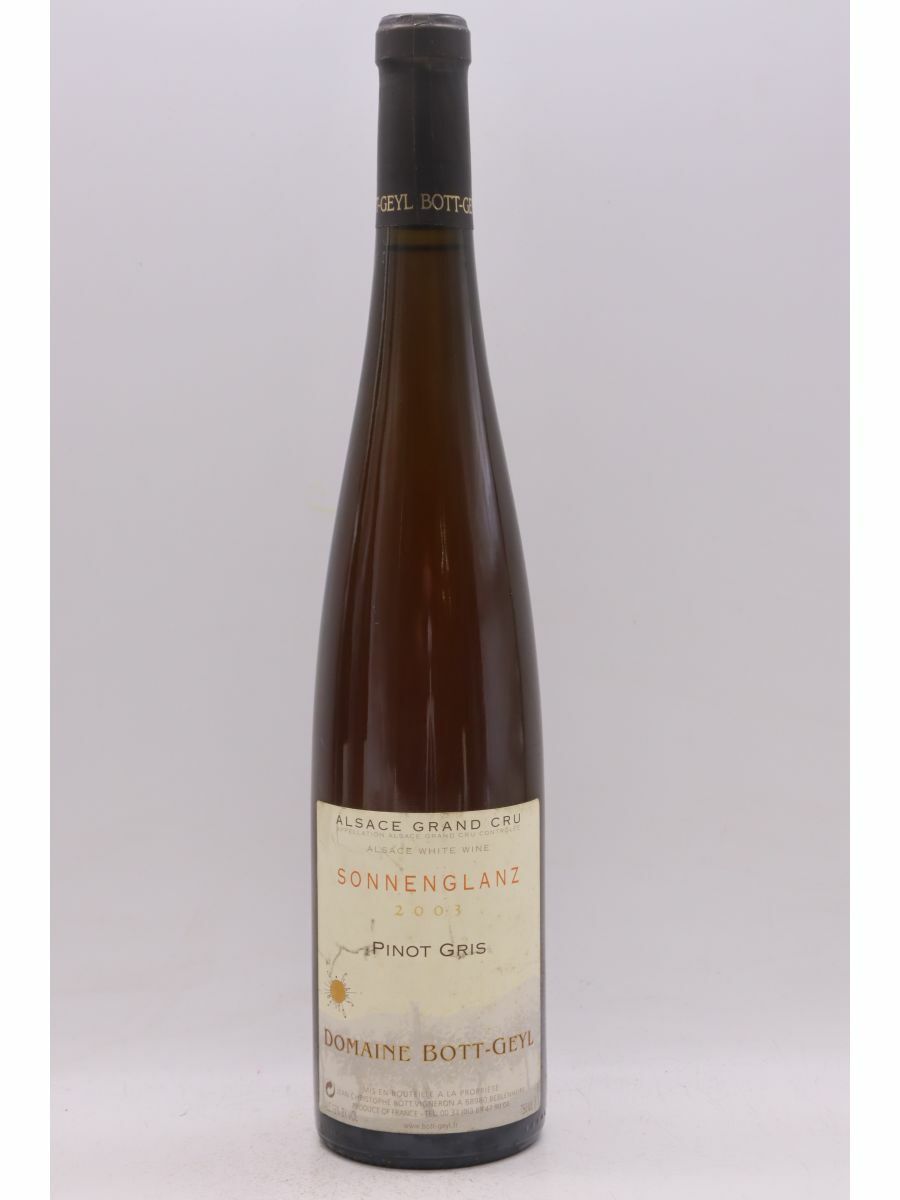
🏰 The 2003 vintage in Alsace was exceptionally hot and dry, leading to very ripe grapes and often richer, more opulent wines. For a Pinot Gris from a Grand Cru like Sonnenglanz, this would likely translate into a wine with significant body, lower acidity than usual, and concentrated flavors. Expect notes of ripe stone fruits like apricot and peach, honey, and possibly some exotic fruit or botrytis influence, given the warmth of the vintage. Bott Geyl is known for its biodynamic practices, aiming for purity and expression of terroir. This 2003, now over two decades old, would have evolved beautifully, developing tertiary aromas of dried fruits, nuts, and perhaps a hint of spice. It's a wine that embodies the old-world style, showcasing how Alsace Grand Cru Pinot Gris can age gracefully.
**Serving Advice for Older Vintages:** Wines of this age can be quite fragile. Handle the bottle with care, keeping it upright for a few days before serving to allow any sediment to settle. Use a proper Durand or two-pronged corkscrew to minimize the risk of a crumbling cork. Decanting is often recommended for older wines to separate sediment and allow the wine to breathe, but for a delicate white wine, a shorter decanting time (30 minutes to an hour) or simply opening it well in advance and pouring carefully might be preferable to avoid over-oxidation. Serve slightly chilled, around 10-12°C (50-54°F), to best appreciate its complex aromatics without masking them with excessive cold.
🍴 Alsace Grand Cru Pinot Gris, especially with some age and richness, pairs wonderfully with foie gras, rich pâtés, roasted poultry with creamy sauces, or even subtly spiced Asian dishes. Its sweetness and acidity can also complement fruit tarts or aged, pungent cheeses.
🥂 This mature Pinot Gris is ideal for a celebratory dinner, a special anniversary, or a contemplative tasting session with fellow wine enthusiasts. It's a wine to be enjoyed for its historical context and evolved complexity, offering a glimpse into a warmer Alsatian vintage.
 Last One