FEATURES
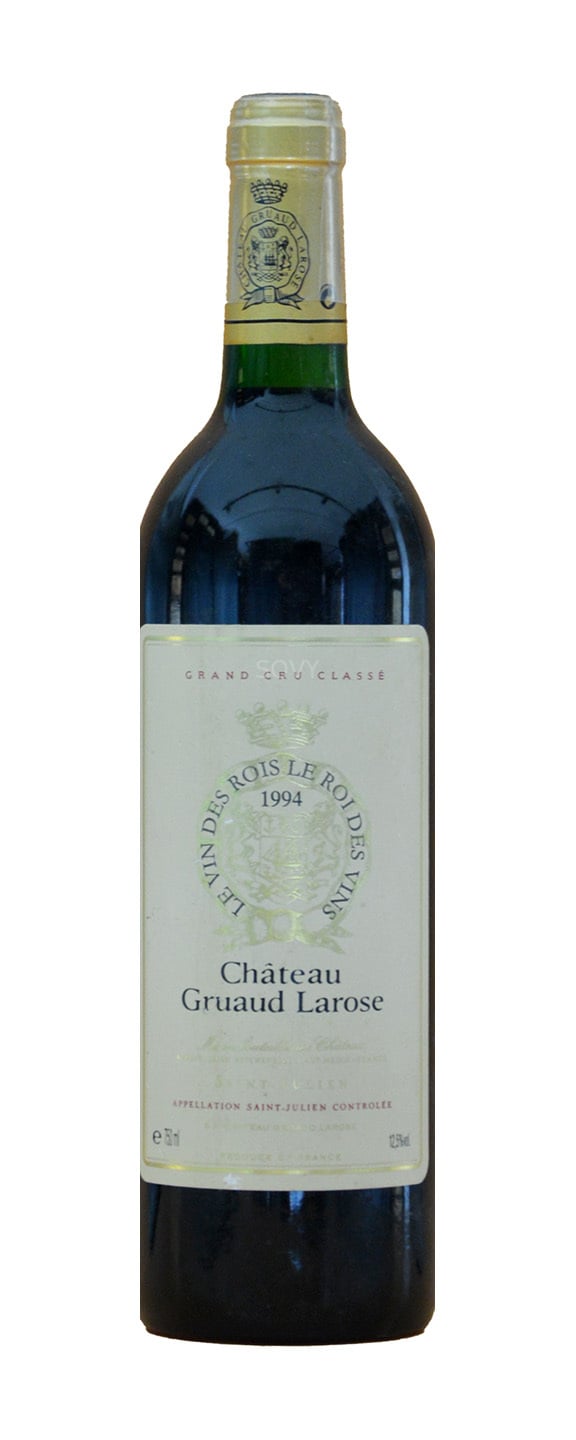
🏰Chateau Gruaud Larose 1994 is a 【Second Growth in the 1855 Classification, known for its age-worthiness and classic St. Julien character, offering complex tertiary aromas and a refined palate after decades in the bottle】. This vintage is well within its peak drinking window, typically between 15 and 35 years after the vintage. Expect evolved notes of barnyard, earthy aromas, stone fruit, leathery, mushroomy, and mossy flavors, with softened tannins. Hints of black currant, cassis, leather, tobacco, and smoke might also be present.
🍴 This mature Bordeaux is superb with classic meat dishes like roasted lamb, beef tenderloin, or duck confit. It also pairs well with hearty fish courses like tuna, mushroom dishes, pasta, and a selection of aged cheeses.
🥂 A superb choice for a milestone celebration or a sophisticated dinner, offering a glimpse into the elegance and complexity of mature Bordeaux. This 1994 vintage is a mature Bordeaux, likely showing developed characteristics. Serve at 15.5°C (60°F) for freshness. Expect significant tertiary aromas and flavors, such as dried fruit, leather, and forest floor. The wine's structure will be softened, and it should be handled with care due to potential fragile corks and sediment. Decant just enough to remove sediment.
🏆St. Julien Second Growths
BACKGROUND
Chateau Gruaud Larose is a wine estate in the Saint-Julien appellation of the Medoc, ranked as a second growth in the 1855 Bordeaux Classification.It is widely regarded as a classic Saint-Julien wine, and is known for its sensible pricing. The vineyard is situated southwest of the village of Beychevelle, on gravel banks sloping towards le Marais de Beychevelle, a marsh that separates Saint-Julien from the vineyards of the central Medoc. The soil is a mix of gravel, pebbles, sand, clay and humus over a subsoil of different clays, sand and pebbles. A total of 82 hectares (203 acres) are planted â 60 percent of vines are Cabernet Sauvignon, with 30 percent Merlot, 7 percent Cabernet Franc and 3 percent Petit Verdot. The proportion of Cabernet Sauvignon has risen in recent decades and there are plans to increase this to around 70 percent over coming years. In the winery, grapes are fermented in large wooden vats before aging in barrel for 18 months.